Welcome to SMS Gateway Proxy
SMS Gateway Proxy Platform
High-performance SMS messaging platform for routing and controlling SMS traffic through SMPP infrastructure.
The platform provides HTTP and gRPC APIs for sending messages, enforcing contact policies, and managing delivery lifecycle at scale.
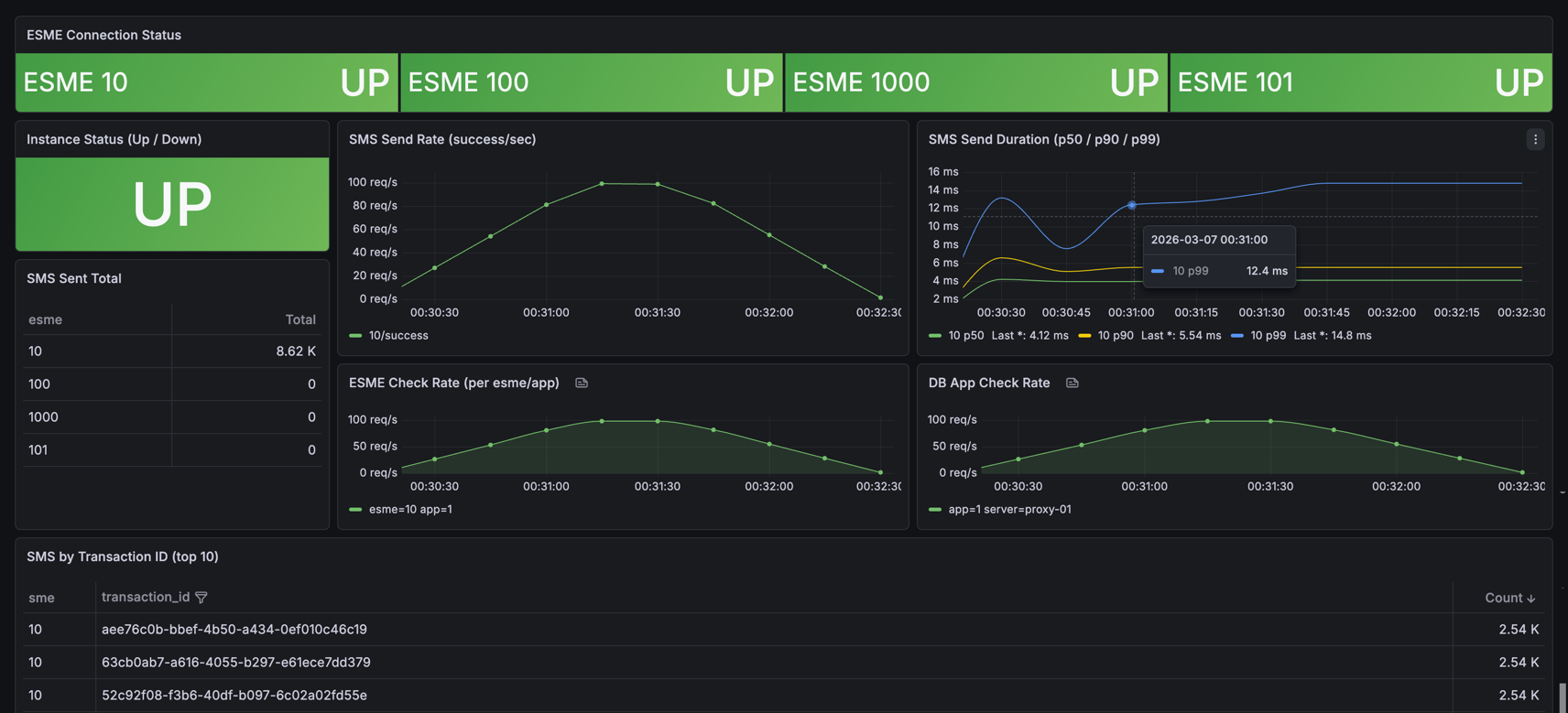
Quick Start
The minimum path from an empty host to your first sent SMS takes about five minutes:
→ Quick Start — Docker Compose, user registration, sending your first message via the REST API → System Architecture — which services are deployed, how they interact, and how a message travels from client to SMSC
Key Capabilities
SMS Gateway Proxy acts as a messaging control layer between your applications and telecom SMS networks. It provides:
- SMS submission APIs — REST (HTTP/JSON) and gRPC (HTTP/2) interfaces for sending messages
- Contact policy enforcement — per-recipient frequency limits, deduplication, and blacklist filtering via the Message Control Platform
- Distributed rate limiting — multi-layer throttling (in-process + Redis) to protect downstream SMSC infrastructure
- SMPP routing and load balancing — virtual pools with Smooth Weighted Round-Robin distribution across multiple SMPP links
- Automatic failover — continuous health monitoring with dynamic rate adjustment when links go up or down
- Message lifecycle tracking — UUID-based transaction tracing from submission through delivery receipt
- Operational observability — Prometheus metrics, OpenTelemetry tracing, and real-time dashboards
Architecture
The system consists of several core components working together:
| Component | Role | Details |
|---|---|---|
| Proxy | Core messaging gateway | Handles API requests, SMPP routing, rate limiting, and delivery tracking |
| Message Control Platform | Contact policy engine | Node-RED-based filtering with frequency caps, dedup, and blacklists |
| Redis | Distributed state | Powers L2 rate limiting and MCP counters across clustered deployments |
| Aerospike | Message storage | Stores message state, delivery receipts, and transaction history |
| S3 / MinIO | Object storage | Hosts blacklist files and CDR (Call Detail Record) exports |
| SMPP Clients | Telecom connections | Persistent SMPP v3.4 sessions to carrier SMSCs |
Messaging Flow
Every message passes through a multi-stage pipeline before reaching the carrier network:
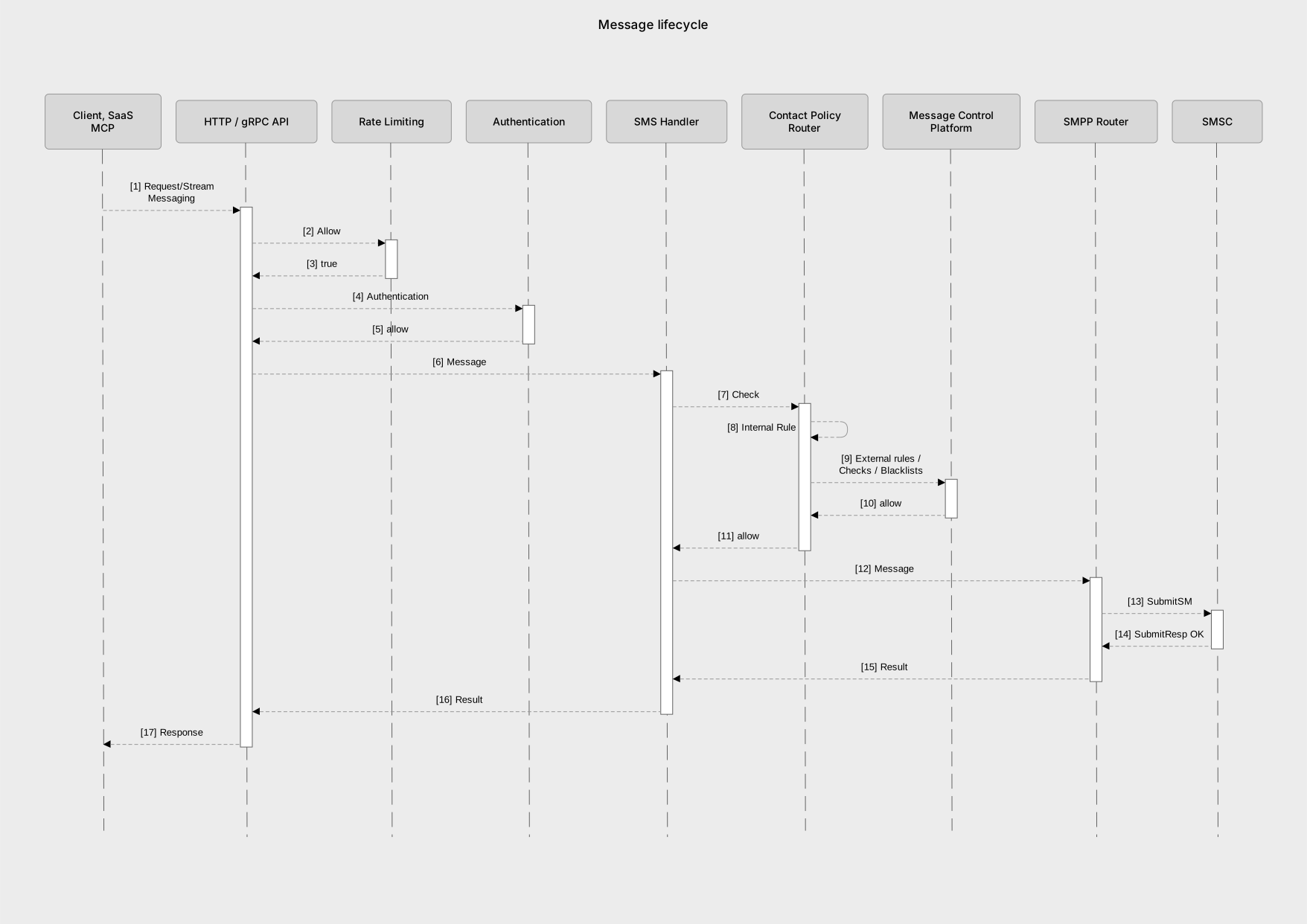
The pipeline stages are:
- Authentication — JWT token and app_id validation, IP whitelist check
- Rate limiting — L1 in-process limiter, then L2 distributed limiter (Redis)
- Contact policy — MCP checks frequency caps, dedup, and blacklist rules
- Routing — message is assigned to an SMPP link or load-balanced across a pool
- Submission — message is sent to the SMSC over SMPP v3.4
- Delivery tracking — delivery receipts (DLR) are captured and stored for status queries
Documentation Guide
Documentation is organized by audience and task. If you're new to the platform, start with Getting Started; if you're deploying for a customer, go to Administration; if you're integrating an API, go to Developer.
Getting Started
The minimum path from introduction to your first sent message.
- Quick Start — Docker Compose, first user, first SMS in 5 minutes
- System Architecture — which services are deployed and how they interact
Concepts
What the platform is, how Proxy works, how Message Control Platform operates, and the terms and abstractions used.
- What is Message Center — product overview and audience
- SMS Gateway Proxy Main Components — modules and areas of responsibility
- SMS Gateway Proxy Architecture — internal message processing pipeline
- Load Balancing — virtual pools and weighted routing
- Rate Limiting — L1/L2 limiters and burst control
- Message Control Platform — contact policies, deduplication, blacklists
User Guide
Working with the Message Center interface: creating campaigns, moderation, managing members.
Administration
Deployment, configuration, operations, and troubleshooting.
- SMS Gateway Proxy Installation — Docker Compose with volumes and network configuration
- SMS Gateway Proxy Configuration — application settings, SMPP links and pools
- Kubernetes Deployment — production cluster
- Message Control Platform Deployment — Node-RED and contact policies
- Monitoring and Alerts — Prometheus, Grafana, log sentinel
- Runbooks for Message Center — step-by-step procedures for common incidents
Developer
Integration with REST and gRPC APIs.
- REST API — HTTP/JSON reference
- gRPC Authentication — protobuf user management service
- gRPC Messaging — protobuf SMS sending service
Use Cases
Ready-to-use scenarios and market positioning of the platform.
- OTP and 2FA
- Internal Corporate Notifications
- Commercial Marketing Campaigns
- Uzbekistan Market
- Competitive Analysis